Crossing the Blues
Showing posts with label cars. Show all posts

2010 LUXGEN Cars New Luxgen7 SUV 2.2-litre Turbocharged

2010 Luxgen7 SUV is model that’s on sale in its home market and if it proves successful, could eventually make its way to the UK and other European countries. It is Taiwan’s first passenger automobile brand Luxgen. The Taiwanese auto brand, Luxgen, has lifted off the covers from its second model, the very new Luxgen7 SUV that according to the maker, “represents a milestone in vehicle design.” The company’s first model was called the LUXGEN7 MPV and received tremendous response in sales and became the first automobile ever to win the prestigious Taiwan Excellence Award. Now with Luxgen7 SUV, the company seems to be scripting another success story.
2010 LUXGEN Cars New Luxgen7 SUV
The 2010 Luxgen7 SUV represents a milestone in vehicle design. The distinctive wing shaped chrome nose trim and cascading grille express both power and confidence and upward sweeping beltlines convey a sense of dynamics motion as well. Measuring at 4.8 meters long, 1.93 meters wide and 1.76 meters in height, the LUXGEN7 SUV is also among the largest in its segment while maintaining elegant and svelte proportions.
LUXGEN7 SUV is also the only one in its segment to feature the intelligent power actuated tailgate as standard equipment. Another exclusive feature in the car is the anti-theft sport seat. The company explains the working in the following statement: “When drivers press the button on the anti-theft seat for three seconds before locking the doors with the remote control, the anti-theft system will activate by sliding itself forward and leaning against the steering wheel to deny unauthorized access of the vehicle.”
The Luxgen7 SUV powered by a newly developed 2.2-litre turbocharged four-cylinder petrol engine producing 175HP at 6,000rpm and 28kgm of torque spanning from 2,500 to 4,000rpm. The petrol unit is coupled to an also new 5-speed automatic transmission equipped with manual shifting function and what Luxgen describes as “intelligent Transmission Control Module with 10 built-in operation modes.” The automatic transmission was developed by Japan’s Aisin.
The Luxgen7 SUV interior design uses the premium leather seat with airline first class style surrounding head restraints together with the available heating, ventilation, electronic and lumbar support adjustment functions to ensure utmost comfort anytime. In addition, the Hi-end Clarion audio system and JBL speakers provide premium sound quality and surreal vocal reproduction to music lovers.
In the interior, the luxury Luxgen7 SUV features Hi-end Clarion audio system with JBL speakers, GPS navigation, four advanced visual assistance systems including Eagle View and many more. In the security system, however, there is SRS airbags, ABS Antilock Braking System, BAS Braking assistance System and EBD Electronic Brake Distribution. The potential buyers have to shell out somewhere between US$25,831 to 35,386 to own a Luxgen7 SUV.
Inside the Luxgen7 SUV you will find premium leather seat available with heating, ventilation, electronic massage and lumbar support adjustment, as well as Hi-end Clarion audio system and JBL speakers. The safety features dual front SRS airbags, Antilock Braking System, Braking Assistance System, and Electronic Brake Distribution system. Furthermore, dual side protection airbags, dual side curtain airbags, Electronic Stability Control, and Traction Control System are also available options.
In addition, the SUV also gets an intelligent 3-mode 4WD system that can actively split engine torque between the front and rear axles based on the road condition and driver input. In Taiwan market, the Luxgen7 SUV is available in five trim levels at prices ranging from NTD 838,000 ($25,831 U.S.) to NTD 1,148,000 ($35,386 U.S.).

2010 New Porsche Sports Cars 911 GT3 at The Geneva

Stuttgart. Dr. Ing. h.c. F. Porsche AG, Stuttgart, is adding yet another new model to the second generation of the 911 model series: the new GT3 even more powerful, faster, and refined than its predecessor. In developing the most sporting and dynamic road-going 911 with a normal-aspiration power unit, Porsche has applied a wide range of know-how gained in motorsport. Indeed, this is precisely why the 2010 new Porsche 911 GT3 is truly impressive not only on the road, but also on the race track.
2010 Porsche Sports Cars 911 GT3
The 2010 new Porsche 911 GT3 is the latest evolution of an iconic sports car. Embodying the essence of more than 23,000 Porsche racing victories, the 911 GT3 is the ultimate integration of driver and car and arrives in the UK this autumn. The new 911 GT3 is making its world debut at the Geneva Motor Show on 3 March, with Europe-wide sales starting in May.
The Porsche 911 GT3 offers an even higher standard above all in two key areas: performance and driving dynamics. The proven six-cylinder naturally aspirated power unit now develops a maximum output of 435 hp (320 kW), up 20 hp over its predecessor. This results first and foremost from an increase in engine capacity by 200 cc to 3.8-litres and from improved cylinder head gas flow: now not only the intake, but for the first time also the exhaust camshafts, are adjusted by VarioCam.
A further important point is that, through its upgraded power and performance, the flat six 'boxer' engine also offers a significant increase in torque at medium engine speeds, a benefit of particular significance in everyday motoring. Clearly, this also means a further improvement in performance; the new Porsche 911 GT3 accelerates from a standstill to 62 mph (100 km/h) in 4.1 seconds and reaches 99 mph (160 km/h) in 8.2 seconds. Top speed is 194 mph.
The second emphasis in developing the Porsche 911 GT3 to an even higher standard was to further improve the car's driving dynamics. For the first time, the Porsche 911 GT3 comes with a particularly sporting variant of Porsche Stability Management (PSM), offering the facility to deactivate both Stability Control (SC) and Traction Control (TC) in separate steps. And to give the driver unrestricted, individual control over the driving dynamics of his car, these functions are not reactivated automatically even under the most extreme driving conditions, but only at the touch of a button.
The Porsche Active Suspension Management (PASM) fitted to the 911 GT3 has enabled Porsche engineers to make the springs and anti-roll bars stiffer yet again, thus ensuring even more precise handling in the PASM 'sports' mode. However, the PASM ensures appropriate ride comfort suitable for everyday use when in the 'normal' PASM mode. The Porsche 911 GT3 rides on new, lighter wheels in a racing-inspired design - with a centre locking nut - fitted with ultra-high performance (UHP) tyres. Tyre pressure monitoring is fitted as standard.
Making the car even more suitable for the race track, the new Porsche 911 GT3 will be available with the option of new and highly innovative Porsche Active Drivetrain Mount (PADM) engine mountings. These special engine mounts recognise a particularly sporting, race-like style of driving, making the normally 'elastic' engine mounts harder and particularly resistant. This retains all the motoring comfort of the GT3 in everyday traffic, while on the race track the effect of the mass forces coming from the engine is much reduced, particularly in fast bends and on winding tracks. Yet a further advantage is improved traction when accelerating from a standstill.
Another new feature is the optional lift system for the front axle which is able to increase the ground clearance of the car, at the touch of a button, for driving on bumpy surfaces or steep gradients - for example into an underground garage - by 30 millimetres (approx 1.2 inches).
The Euro base price of the new GT3 is Euro 98,100, in Germany the retail price including value-added tax and specific national features is Euro 116,947. In the USA the GT3 will be at the dealership in October at a price of USD 112,200 (MSRP without taxes).

2010 New Porsche Sports Cars 911 GT3 R

Porsche has unveiled the 2010 new Porsche 911 GT3 R. The 911 GT3 R will be raced in series based on the international FIA GT3 regulations, thus succeeding the 911 GT3 Cup S. The 911 GT3 R is powered by a four-litre six-cylinder boxer engine delivering maximum output of 480 bhp (353 kW) transmitted to the rear axle by a sequential six-speed dog gearbox.
2010 New Porsche Sports Cars 911 GT3 R
The GT3 R offers 30 bhp more than the Porsche 911 GT3 Cup model. Both cars are based on the extra-wide body of the 911 GT3 RS street-legal sports car.
Porsche AG continues to work deep into the 2010 competition season. The new Porsche 911 GT3 R replaces the 911 GT3 Cup S in the range of competing models of the brand. The 911 GT3 R participate in the tests based on international regulations FIA GT3. A sequential gearbox six-speed is responsible for transmitting that power to the rear axle.
It is based on the Porsche 911 GT3 Cup, presented in September 2009, and intended to compete in single-brand glass. With the increase in displacement at 0.2 liters, the GT3 R achieves 30 hp increase in power compared to GT3 Cup racing Both vehicles take the widened bodywork of the 911 GT3 RS series.
The antilock brake system (ABS), traction control and electronic throttle prepared to adapt the engine speed in each gear change, making it much easier driving in relation to its predecessor, so this new model will also most appropriate for amateur drivers.
The Porsche 911 GT3 R weighs 1,200 kg, comes with an anti-lock brake system (ABS), traction control and an e-gas with “throttle-blip” function make it much easier to get used to this new GT3 racing car than its predecessor, meaning that the new model is also more appropriate for the ambitious amateur racing driver.
The flared wheel arches, both in the front and the rear channels show a higher compared with the previous model. The underside of the vehicle are fully lined and features a rear diffuser. The possibilities of regulating the rear wing have also been increased. The race suspension has several settings.
Front, McPherson has a structure adjustable in height, with SACHS shock variables and two-way dual dock. Behind, the GT3 R has a highly rigid sub-frame, with a multilink axle adjustable height and the Sachs shock absorber adjustable two-way dual dock.
The Porsche 911 GT3 R is making its world debut on 14 January 2010 at the Birmingham Motor Show and the price is 279,000 Euros.

2011 Ford Saleen Cars S302 Debuts at Carlisle Ford Nationals

Saleen Performance Vehicles is unveiling the latest product in its premiere line of high-performance cars, the 2011 Saleen S302 Ford Mustang. The debut will take place this weekend at the Carlisle Ford Nationals in Carlisle, PA. This is the first Saleen vehicle launched this year, following the successful launches of the 435S and S281 in 2009.
2011 Ford Saleen Cars S302
The Saleen S302 is based on the 2011 Ford Mustang 5.0-litre, thrust is provided by the same V8 engine and it pushes out 317 kW (425 bhp / 431 PS) while torque is 536 Nm (395 lb-ft). Drive is through the rear wheels via a 6-speed manual transmission and a limited slip differential.
The Saleen S302 is builds on the Saleen tradition of offering limited-edition, high-performance vehicles for enthusiasts who are looking for an exhilarating driving experience, with refined drivability for real-world road conditions. Available in both coupe and convertible body styles, the S302 boasts a premium level of design consideration, both exterior and interior, with performance to match.
“We’ve taken high performance vehicles to the next level with this S302 Saleen,” said Michael Timarac, Brand Manager, Saleen Performance Vehicles. “The S302 is being built now and will be in dealerships in the coming weeks. I’m proud of this product and those who value performance vehicles will agree that the S302 is one of the best American exotic vehicles available on the market.”
The S302's exterior design features carefully crafted sculptural detailing, with lines and forms that flow naturally and suggest suppleness, power and agility. Exterior features include 20-inch, 7-spoke alloy wheels with Pirelli P-Zero high-performance tyres, a strong but elegant front grille and a simple integrated rear wing. The S302's 5.0-liter V8 engine produces 425 hp and 395 lb.-ft. of torque, sent to the rear wheels through a six-speed manual transmission and a limited-slip differential with 3.73:1 final drive ratio.
Inside an atmosphere of style-meets-sport exists, encouraged by such items as leather sports seats, chevron-like Ultrasuede red tabs in the seatback bolsters, Saleen logos on door panels, as well as unique gauges, steering wheel and gear shifter. The interior features new, leather sport seats with Ultrasuede inserts, highlighted by chevron-like Ultrasuede red tabs in the seatback bolsters, and unique treatments of the gauges, steering wheel, center console and shifter. There also are contrasting Saleen logos in the door panels, and Saleen logos in the door sill plates that illuminate when the door is opened.

Mini Cooper: Mini Mini rumored to be in the works


Post by: Automotive

Wolfgang Armbrecht, head of BMW's Mini brand recently hinted that a smaller small car may be in the works. In an interview with Germany's Financial Times Deutschland, Ampbrecht admitted that Mini may develop a small car for parent company BMW. We've actually heard these rumors before when talk sprang up about the potential for a BMW 0 Series.

If the thought of a Mini Mini crossed with BMW parts makes you excited, you're not alone. Who could say 'No' to the Ultimate Go-Karting Machine? As of yet however, there are no reports of a build timeline or potential specs, but a glimpse of what's to come is said to be earmarked for next month's Detroit Auto Show.

source: Mini Cooper Press

Jeep Compass 2011


Post by: Automotive

New, Redesigned 2011 Jeep® Compass: Sophisticated New Styling, Unsurpassed Capability and Fuel Economy and Loads of Standard Features

- New 2011 Jeep® Compass is beautifully redesigned, reflecting the styling cues of the all-new Jeep Grand Cherokee
- Unsurpassed compact SUV 4x4 fuel economy (28 mpg) and off-road capability, and innovative interior features combine to provide tremendous value
- Upgraded interior features soft touch points and high quality materials
- Exceptional ride and handling performance in all weather conditions is the result of upgraded steering and suspension systems for 2011
- 2011 Jeep Compass features more than 30 safety and security features, including standard electronic stability control, electronic roll mitigation, Hill-start Assist and side-curtain air bags that cover all rows
- 2011 Jeep Compass now offers Trail Rated® 4x4 capability with Freedom Drive II® Off-Road package
Compass joins Jeep Patriot as most capable in compact-SUV segment


Auburn Hills, Mich. - Offering unsurpassed 4x4 fuel economy and off-road capability in the compact-SUV segment, the new 2011 Jeep® Compass features a stunning new sophisticated design, with cues coming directly from the brand’s premium icon, the new Jeep Grand Cherokee.

Coupled with a host of interior refinements, and improved ride and handling characteristics in all conditions – courtesy of upgraded steering and suspension systems – the new Jeep Compass offers a unique blend of premium styling, capability, efficiency and value that is unmatched in the compact-SUV segment.

“With the new 2011 Jeep Compass, we’ve applied the premium design cues of our award-winning new Grand Cherokee,” said Mike Manley, President and CEO — Jeep Brand, Chrysler Group LLC. “Combined with new interior appointments, and refinements to the suspension and steering systems, Jeep Compass provides consumers the ultimate combination of styling, capability, fuel economy, efficiency, safety and value in the important compact-SUV segment.”

Delivering the packaging and interior flexibility of an SUV with the performance, handling, fuel economy and price of a compact car, the new 2011 Jeep Compass also boasts more than 30 safety and security features, including standard side-curtain air bags, electronic stability program (ESC), electronic roll mitigation, Hill-start Assist (with manual transmission), side curtain air bags for all rows and available front-seat-mounted side air bags.

Design

The new 2011 Jeep Compass has a distinct family resemblance to the all-new, premium 2011 Jeep Grand Cherokee.

With a new hood, new front fenders, new fascia and new headlamps as well as a new grille that has been detailed with a small dose of chrome surrounding the traditional seven slots found on all Jeep vehicles, the new face of the Compass features a more serious, yet sophisticated, appearance. Forward lighting performance is improved with the use of quad reflector headlamps, and the fog lamps are now high output projector lamps. Adding an element of muscle, the hood has been enhanced with a subtle power bulge. The result is a vehicle that projects an attitude that is much more serious and conveys the Compass’ capability in all weather and driving conditions.

New brightwork throughout the exterior lends an upscale touch without compromising the off-road performance of the Compass. A band of protective cladding has been added for 2011, serving to fend off debris when driving in challenging weather conditions or off-road, and providing a new appearance.

This trend continues with enhancements to the rear of the Compass. A new rear fascia, new body-color rear spoiler and subtle, upscale touches including new LED taillamps and on the Limited model, bright trim on the step pad and a chrome exhaust tip adorn the new 2011 Jeep Compass. Topping it off, a new set of roof rails were designed with a slimmed down appearance and a small amount of brightwork. The 2011 Compass sports new, standard 17-inch aluminum wheels, and 18-inch aluminum or chrome-clad wheels are available on Limited models.

Interior upgrades for the 2011 Jeep Compass include new soft touch front-door trim panels with a padded upper surface; a new center armrest; a new Jeep steering wheel with integrated controls that allow the driver to operate the radio, cruise control, available handsfree phone and other vehicle functions while keeping their hands on the wheel; new cloth interior with premium cloth bucket seats in the front; standard speed control on all models; new backlighting of door switches, door locks, windows and power mirror controls.

The new 2011 Jeep Compass offers an array of clever features consumers will appreciate whether commuting to work, driving in challenging weather conditions, exploring new trails or out-of-the-way places. Uconnect media center with iPod interface, SIRIUS Satellite Radio, navigation with SIRIUS Travel Link, power sunroof, a premium audio system with nine Boston Acoustic speakers, illuminated cup holders, liftgate speakers and fold-flat rear seats are some of the available cool features that make the Compass the perfect compact SUV, enabling consumers to enjoy any adventure.

The 2011 Jeep Compass is packed with standard features that provide value and convenience for drivers and passengers. Standard features include air conditioning, power windows, power locks, power/heated exterior mirrors, keyless entry, aluminum wheels, fog lamps, cruise control and sunscreen glass.

New for 2011 the Jeep Compass offers an All-weather Capability Group option which includes Goodyear 17-inch all-terrain tires, all-season floor mats, daytime running headlamps, engine block heater and tow hooks.

Segment-leading Capability

The 2011 Jeep Compass offers customers unsurpassed 4x4 off-road capability with Jeep Freedom Drive II. The new Jeep Compass also boasts a retuned suspension for 2011, with higher spring and damping rates, added rebound springs, and an increased diameter of the rear sway bar. Despite these numerous capability features, the 2011 Jeep Compass boasts unsurpassed 4x4 fuel economy in its segment.

Jeep Compass is available in three drivetrain configurations. In addition to the standard front-wheel-drive system, Jeep Compass also is available with Freedom Drive I and the Freedom Drive II Off-Road Package.

Freedom Drive I is an available full-time, active four-wheel-drive system with lock mode designed to give drivers year-round assurance with the ability to handle rough weather and low-traction conditions. This active four-wheel-drive system is recommended for daily use, including slick conditions that come with rain and light snow. Freedom Drive I also features a lockable center coupling, giving drivers the ability to put the Jeep Compass in four-wheel-drive lock mode to handle deep snow, sand and other low-traction surfaces.

The Freedom Drive II Off-Road Package is an available four-wheel-drive system that delivers Jeep Trail Rated® capability in Compass form. The Freedom Drive II Off-Road Package includes a second-generation continuously variable transaxle with low range (CVT2L) that engages when the off-road mode is activated, 17-inch all-terrain tires and aluminum wheels, a one-inch raised ride height, a full-size spare tire, skid plates, tow hooks, fog lamps and manual seat height adjuster. The available Freedom Drive II Off-Road Package is recommended for moderate off-road situations that include steep grades, occasional wheel lift and rock or log climbing.

The 2011 Jeep Compass’ powertrain is designed to deliver world-class performance in all weather conditions, fuel economy and refinement, all at an affordable, value-packed price.

Compass features a standard 2.0-liter World Engine for the Compass and Latitude models that provides 158 horsepower (117 kW) and 141 lb.-ft. (191 N•m) of torque coupled with the continuously variable transmission (CVT2), and delivers unsurpassed 23 mpg in the city, and 29 mpg on the highway when mated to the five-speed manual transmission.

The proven 2.4-liter World Engine produces 172-horsepower and 165 lb.-ft. of torque and is available on all models and standard on the Limited. This 2.4-liter World Engine has dual Variable Valve Timing (VVT) on both intake and exhaust camshafts, which helps optimize the torque curve at all speeds and produces more power, better fuel economy and smoother, quieter operation than engines without dual VVT. Dual VVT is a technology typically not available on vehicles sold in the United States in the Jeep Compass’ price class. The Jeep Compass’ 2.4-liter four-cylinder engine paired with a five-speed manual transaxle in front-wheel drive configuration delivers unsurpassed 23 miles per gallon (mpg) in the city, and 29 mpg on the highway.

Jeep Compass also features a standard five-speed manual transaxle on the entry-level Compass and a CVT that is available on the Compass and standard on the Latitude and Limited models. The Compass’ CVT2 is a second-generation CVT that Chrysler Group engineers calibrated for pleasing engine response and precise ratio control. CVT2 contributes to a fuel economy improvement of 6–8 percent compared with a traditional four-speed automatic. The Compass CVT2 also improves vehicle performance compared with a traditional automatic transaxle because of optimized gear ratios, especially in the 30–60 mph range during passing maneuvers.

The 2011 Jeep Compass also provides up to 2,000 lbs. of towing capacity.

Jeep Compass Model Lineup

The 2011 Jeep Compass is available in three configurations: Compass, Latitude and Limited. All are available with front-wheel drive, the Freedom Drive I full-time, active 4x4 system or the Freedom Drive II Off-Road Package full-time, active 4x4 system with low-range capability.

The 2011 Jeep Compass is available in the following exterior colors: Blackberry Pearl Coat, Bright Silver Metallic Clear Coat, Bright White Clear Coat, Brilliant Black Crystal Clear Coat, Deep Cherry Red Crystal Clear Coat Deep Charcoal Gray (limited availability) and Mineral Gray Pearl Coat (late availability).

Built at the Belvidere Assembly Plant in Belvidere, Ill., the new 2011 Jeep Compass models will begin to arrive in Jeep showrooms in December 2010.


About Jeep

Built on nearly 70 years of legendary heritage, Jeep is the authentic SUV with class-leading capability, craftsmanship and versatility for people who seek extraordinary journeys. The Jeep brand delivers an open invitation to live life to the fullest by offering a full line of vehicles that continue to provide owners with a sense of security to handle any journey with confidence.

The 2011 Jeep vehicle lineup includes Compass, Grand Cherokee, Liberty, Patriot, Wrangler and Wrangler Unlimited. To meet consumer demand around the world, all Jeep models are sold outside North America and all are available in right-hand drive and with gasoline and diesel powertrain options. Chrysler Group LLC sells and services vehicles in approximately 120 countries around the world.

source : Jeep Press

New Lexus RX450h 2011


Post by: Automotive


Lexus RX450h has been completely redesigned for 2010, and Lexus has introduced minor changes to the year 2011. Over the years, Lexus has been setting the standard for the crossover segment, Lexus decided that messing with success is not the way to go.

The new RX is grown in almost all its dimensions than previous generations, but the end result is a better looking vehicle overall. While the previous generation RX looked bubble, the new RX has sharp bends and its maximum and then give an attractive appearance.

The new RX headlights, taillights and grille are much more aerodynamic and a spoiler mounted on the roof gives it a sporty look. Lexus identifies with hybrid formations Logos blue-trimmed, tinted headlights, tail lights and our test vehicle also came with 19-inch wheels. We think Lexus has done a great job in refining the exterior of the 2011 RX450h and it's really a vehicle other than looking over the competition.


Lexus 450h shares the inside with his brother, non-hybrid, the only difference is the display that shows information about hybrid. Like any other Lexus, the interior quality is first rate and the RX is loaded with high-tech options such as heads-up display, CD changer, navigation with Bluetooth audio and XM Satellite Radio. The best thing about the RX is the Remote Controller that really puts the Touch iDrive and similar systems to shame. We played with the controller and were amazed to see how simple life can be.

RX 450h is powered by 3.5 liter V6 is carried over from last year's model with the combined production of 295 horses. The Atkinson cycle V6 with the help of electric motors hour increases fuel economy by about 10% over the previous generation RX. Lexus engineers have mounted a DC 288V Ni-MH battery under the rear seats that receives power from two or three engines, depending on FWD or AWD configurations.

Overall, we believe that Lexus has really learned this segment of the crossover and now with a hybrid variant are a force to reckon with. It 's true that there is someone available for Highlander Hybrid does not want to spend more than $ 51K, but Lexus has a cult following. In this day and age we all pay for the brand and Lexus RX450h is no different. So if you have a small family and are cautious green then RX450h is a perfect purchase. It is a crossover of performance, but anyone in the market for a hybrid is well aware of this fact. We really think that Lexus RX450h is for someone who cares about energy efficiency, yet still want luxury - Lexus RX450h is exactly that!
source: Lexus Press

2011 New BMW X3: Martha Stewart Designs


Post by: Automotive


Martha Stewart has accepted an invitation from BMW to design your dream BMW X3 Sports Activity Vehicle BMW using "E 'Dream. Building. Driving." Programme. Martha used the "Build Your Own" tool online at bmwusa.com to customize your BMW X3.

Customization is a specialty for the new BMW X3, the vehicle has more than 70 million unique configurations. Martha Stewart has designed her to have a X3xDrive35i Sparkling Bronze Metallic exterior, one of three special exterior colors that are available only for the BMW X3 custom orders. Martha's BMW X3 has a Sand Beige Nevada leather upholstery and wood interior trim Fineline Wave.


Recently, Martha and The Martha Stewart Show "crew went to Spartanburg, South Carolina to watch the production of its BMW X3. Martha experienced firsthand where BMW makes all the BMW X3, X5 and X6 vehicles to customers around the world and has interviewed people who make them. The last stop of the day was the BMW Performance Center, where Martha tested the last car on the track driving his BMW.

Viewers can watch Martha's visit to BMW on Tuesday, December 14 at 10:00 ET / 9 c on "The Martha Stewart Show" on Hallmark Channel. During the show, Martha will have the keys of his very own BMW and visitors will be encouraged to continue watching the show to find out how to enter for a chance to win your BMW X3.
source: BMW Press

2011 BMW 1-series M Coupe

Post by: Automotive

With the anticipation of fans around the world at its peak, the BMW M GmbH introduced the newest member of its product family intimate. For the first time, M coveted badge has been given to the popular 1-Series BMW 1-Series in the form of all-new BMW M Coupe. Badge M submitted after two years of the development process through the BMW M engineers and test drivers achieve extraordinary power delivery and a signature, near-perfect driving behavior of the BMW M cars. 2011 BMW 1-Series M Coupe will be available in limited quantities and with limited options on the Official BMW Center in Spring, 2011.

"Eigenwillig," the German word for "self-willed," "individual," and "decided to go their own way," has been the right word to describe the M car is unique and impressive than the last three decades. With the original 1988 BMW M3 as his inspiration, 2011 BMW 1-Series M Coupe combines the raw ability of a racing car with the agility, flexibility, and a seated position from a compact sedan to the BMW Ultimate Driving Machine ® makes pure. Thus, the BMW 1-Series M Coupe continues the tradition of BMW M. eigenwillig With the latest two-door model, BMW M is to describe the ability to build a performance car racing into a small car, capable of daily use.


Dimensions and Construction

New BMW 1-Series M Coupe has been developed for near-perfect balance and footprint, a large square. It is 71 inches (1803mm) wide - 4.8 inches (122mm) wider than its 1988 ancestor M3 - but only 1.3 inches (33mm) longer at 172.4 inches (4379mm) long. New BMW 1-Series M Coupe weighs in at 1495 kg DIN (£ 3296, the beginning), and features a wheelbase (2659mm) 104.7 inches, three inches longer than the M3 of 1988. Front and rear track width is exactly the same on the BMW 1-Series M Coupe at 60.7 inches (1542mm) each. Compared with 2011 BMW 135i Coupe, BMW 1-Series M Coupe is 0.2 inches (5 mm) longer, 2.1 inches (53mm) wider, 0.5 inches (13mm) taller, and rides on a 104.7-inch same (2659mm) wheelbase. Features a track 2.8 inches (71mm) wider in front and 1.8 inches (46mm) wider in the rear, and DIN weight 35kg (77 lbs, preliminary) less.

New BMW 1-Series M Coupe features a high strength steel unibody, with a unique, widened fenders and rear quarter panel to house track widened substantially. He also has a metal roof panel that saves about 35 lbs (15kg) compared to the BMW 1-Series models are equipped with a moonroof. 2011 BMW 1-Series M Coupe, built as one of the most BMW vehicles performance-oriented in recent years, may not be offered with a moonroof. This weight savings - at the highest point of vehicle - provide an appropriate reduction in the center of gravity, which contributes to enhanced driving dynamics. It also helps maximize head room (or space helmets, such as might occur).

Engineering chassis is "faster than the engine"

Providing sure-foot responsive handling for high performance, powerful and luxurious coupe, while keeping mass under control, presented many challenges for the engineers of BMW M. The result is an aluminum suspension which was originally for the current generation M3, and tuned specifically for this model in the BMW M Nurburgring Nordschleife test center. Of course, every BMW design begins with preparing the main components in a way that allows near-perfect front / rear weight balance (51.7/48.3).

Almost all aluminum front-end components, including front struts, swivel bearings, central subframe and an additional impetus panel below the engine serving to maximize lateral stiffness of the entire front.

At the rear axle, subframe, transverse arms, arm track, and wheel hubs have been reviewed by M to the ideal kinematics, geometry and stiffness. Virtually every detail on the five-arm rear axle made of aluminum and a new generation of BMW M cars, including aluminum dampers.

Both front and rear axles feature hollow bar anti-roll optimized for function and body weight. Combining two additional longitudinal reinforcement bars, axle kinematics tailored to the perfect way to track a whole and the character of the car. As a result, both in terms of stability and weight, according to the balanced performance concept of every BMW M vehicles.

Compounds Brakes and Wheels

A powerful braking system suitable for a car with performance that far was originally developed for the current generation BMW M3. The players internally-vented, cross-drilled iron discs measure 14.2 inches (360mm) diameter in front and 13.8 inches (350mm) at rear. Featuring large compound disc brakes and electronic anti-lock, stopping power for the BMW 1-Series M Coupe a strong, precise and consistent. Each disk is connected to a floating aluminum hub by cast-in stainless steel pin. This configuration reduces the thermal load on the disk, thus improving their performance and service life. An electrically-driven pump provides the vacuum system.

Service - and safety - is enhanced thanks to an integrated wear indicator which, through a dash display, allows the driver to monitor the condition of brake. Brake Service - closed for four years or 50,000 miles under the BMW Ultimate Service - thus can be given when necessary without guesswork.

BMW 1-Series M Coupe is equipped with a wheel, M light-alloy-specific cross-talk from the M3 Competition Package and GTS limited-production M3. They measure 19 x 9 inches with low-profile tires 245/35/R19 on the front and 19 x 10 inches with tires 265/35/R19 in the back, and silver in color.

In the BMW 1-Series M Coupe, the transmission power to the rear wheel also provides an ideal base for exciting driving dynamics because of segregation of duties consistent drivetrain and steering. Steering rack-and-pinion equipped with hydraulic power steering system called Servotronic, which regulates impulse in relation to road speed.

Engine

Heart of every BMW is the engine, and an inline-6 with exceptional performance, behavioral free-revving, and pushing and shoving endless BMW 1-Series M Coupe. This concept is known: in the history of BMW M models, high-revving inline-6 is one of the classic machine formats. In the second and third generation of the BMW M3, the-inline 6 became famous because it combines high output, sharp response, and a loud voice. In the BMW 1-Series M Coupe, the inline-6 engine concept embodied in the most up-to-date form.

twin-turbocharged, all-aluminum, 3.0-liter inline-6 engine is characterized by instantaneous response to accelerator pedal, sounds fantastic, and free-revving spirit. The combination of low-mass turbochargers and twin BMW High Precision Injection direct offer naturally-aspirated engine output will only be able to provide through movement of more cylinders and bigger.

The system was developed for the engine turbocharger 1-Series BMW M Coupe maintain high output throughout the engine speed range. Maximum output of 335 hp (250 kW) delivered at 5900 rpm. nominal peak torque is 332 pounds-ft (450 Nm) from 1,500 rpm to 4500 rpm. Redline is 7000 rpm. An enhanced engine management system BMW 1-Series M Coupe includes electronic overboost function which briefly controlled increase torque at full load conditions by another 37-lb ft (50 Nm). This peak torque of 369 temporary lb-ft to give the car a substantial increase in acceleration. BMW 1-Series M Coupe will complete the sprint from stop to 60 mph in just 4.7 seconds (0-100 km / h in 4.9 seconds). Signs emerged standing quarter mile in 13.2 seconds. Top speed is limited electronically to 155 mph (250 km / h).

Signature sound to accompany the wave power

Exhaust system from the BMW 1-Series M Coupe is set by M specifically for this new model. acoustic technique gives the car a unique personality in all phases of operation. M exhaust system easily recognized by the presence of four signing of the exhaust pipe.

Drive M Button

New BMW 1-Series M Coupe is also equipped with steering wheel-mounted M button Drive which makes its first appearance in 2006 M5. In the BMW 1-Series M Coupe, M button to activate the program sharp throttle response for the sportiest driving. This means that the engine performance characteristics can vary according to the driver's wishes.

6-speed Manual Transmission

A ratio 6-speed manual transmission is used for transmission power close to the rear wheels on the BMW 1-Series M Coupe. It is specifically designed to interact with high torque engines and have been suitable for this purpose with flood cooling system dry. A flywheel upgrade to high-torque applications installed between the engine and transmission. This transmission is operated using a lever M is very short gearshift. final drive ratio of 3.15:1.

Variable M differential lock, DSC with M Dynamic Mode

BMW 1-Series M Coupe is equipped with variable M differential lock. This produces the locking torque on-demand and variable, thus providing optimal rear-wheel drive traction on all road surfaces. The key response variable M differential rotation velocity difference on the right and left rear wheel, direct drive torque in a split second. So where there are significant differences in the coefficient of friction between the right and left rear wheels, for example, optimum traction and propulsion possible maximum is guaranteed. Centrifuge principle of variable M differential lock to support the dynamic nature of both rear wheels on slippery surfaces and when accelerating out of bends.

This gives the BMW 1-Series Coupe M benefits traction on slippery surfaces, snow and sand. It also supports auto-sporty style in the narrow, winding roads like a mountain pass since the optimum traction and a maximum torque available drive when accelerating out of corners. So in this model, the variable M differential lock proves ideal support for the dynamic nature of rear-wheel drive.

Dynamic Stability Control (DSC) from the BMW 1-Series M Coupe includes elements such as Antilock Brake System (ABS), a function of anti-slip control (ASC), brake assistant Dynamic Brake Control (DBC), hill-hold assistant to start off, Cornering Brake Control (CBC), the function of brake fade compensation and Brake drying function. In wet or slippery surfaces DSC secretly intervened to limit oversteer.

As an alternative to the status of normal operation, the driver can activate the M Dynamic Mode (MDM) MDM by pressing the button between the front air vents, increasing the threshold of intervention of the DSC system. MDM allows very little oversteer dynamic in specific situations to enable the vehicle yaw optimized for maximum performance. Demonstrations at the BMW Performance Center in Spartanburg, SC has been shown to activate the MDM mode lick the fastest-possible performance while still providing assurance and protection of the Dynamic Stability Control. MDM also facilitate the start of the snow or loose surface carefully controlled amount of wheelspin. DSC can be entirely disabled via a press-button long MDM (ABS remain active.)

Innovative Aerodynamics: Water Curtain

Consistency of form and function is very important for engineers at BMW M, the search for the perfect balance of various factors aerodynamics in wind tunnels. As a result, the BMW 1-Series M Coupe is equipped with the latest innovations BMW aerodynamics. air curtains, used here for the first time in a production vehicle BMW, enhance airflow around the wheel arches with the benefits of turbulence are significantly reduced.

Innovative aerodynamic features consist of openings on the outside bottom of the front fascia that routes high-pressure air through channels in every corner of the front. Channel approximately 10 x 3 cm wide and is designed to channel air to the openings in front of each wheel arch, where he disposed of through a very narrow hole at high speed. Air flow out covers the side of the front wheel like a curtain, thus reducing aerodynamic turbulence that is not profitable in the vicinity of rotating wheels.

This feature has a key role in the development of aerodynamic innovation future. An example of the principle of the air curtain was first presented in the BMW Vision EfficientDynamics concept study at the International Motor Show (IAA) in Frankfurt in 2009, and the developer BMW 1-Series M Coupe takes the task of pioneering application of this element for the production vehicle. To do so, they utilize the unique capabilities of the new full scale "rolling road" wind tunnel testing at the BMW Group Aerolab Aerodynamic Center.

Design

There are three exterior paint finish to choose from for the BMW 1-Series M Coupe. In addition to non-metallic Alpine White and Black Sapphire Metallic, Valencia Orange Metallic available exclusively for high-performance compact sports car.

Strongly shaped front fascia is dominated by three large air intake that is safe for air cooling of high-performance engines. Air enters the central area is covered by a honeycomb grille-structured, while the two outer intake that actually open. This means that in every situation on the road or track, a number large enough cooling air is fed directly into the engine oil cooler on the right and to the additional cooling radiator on the left.

With greenhouse convey the impression of light, strong shoulder line of distinctive and complex sculpted surfaces symbolize athleticism precisely controlled in the profile. The wheel arches of the model 2-door bulge out especially voluminously both in front and rear. One of the characteristic features of M is a chrome gill elements in the front wheel arches are very elongated. It bears the turn indicator M brand and logos, as well as forming the starting point of the character line along the door handles to the rear. A vertical edge of the contour starts at the element that leads to a threshold gill side. Fine-tuning in the wind tunnel has also formed a design of the exterior mirror. In their basic form are the same as those of the BMW M3.

Strong wheel arches that also makes the back of the BMW 1-Series M Coupe seems to be very broad. The horizontal line is set emphasizes this impression. A wise spoiler lip on the trunk lid to produce additional downforce on the rear axle at high speeds. Rear fascia has a side opening that echoes the appearance of Water Curtain intake in the front fascia. M symmetry visual characteristics that are created by two sets of chrome twin tailpipes, each positioned towards the outer edge. L-shaped rear light clusters with red glass cover makes nighttime lighting characteristics. In this, the backlight is provided by two banks of lights fed by the LED units.

BMW 1-Series M Coupe features standard Adaptive Xenon headlights. Twin round lights cut at the top of the LED-fed "eyebrows." This is what creates the appearance focused BMW 1-Series M Coupe.

Interior Focus

M-special cockpit developed exclusively for BMW 1-Series M Coupe is designed to facilitate focus, sporty driving. High-quality, black Alcantara with orange contrast stitching covers the door panels, door pull, binnacle instrument cluster, dashboard panels and gearshift lever boot and hand brake. Driver's attention is focused on the M-specific instrument cluster with a fast gray, classic red M pointers, and a white backlight. A driver's footrest and frame M M round entry of a unique interior.

Black leather sports seats in the Boston standard has orange contrast stitching and logo on the front of M arise each headrest. heating Seats are available for both front seats. The orange contrast stitching is also echoed in the back seat and in all the design elements featuring Alcantara. M leather multifunction steering wheel now features M-everywhere Keys to spontaneous activation of sharp throttle response and M Dynamic Mode DSC.

The dominance of dark surfaces, including the A pillar and the anthracite headliner trim to reduce the glare of the sun and promote a focus on the road. In combination with high-quality materials, contour plan, and selective color accents, the interior of the BMW 1-Series M Coupe providing the perfect environment for the pursuit of driving pleasure.

Safety Equipment

BMW vigorously pursue a philosophy of safety with three key modes: a avoid accidents), superior, b) superior crash survivability, and notices c) comprehensive post-accident. BMW 1-Series M Coupe features a wide selection of standard equipment that underlines BMW's safety culture research. Standard safety features include front, pelvis-thorax and side head curtain airbags, automatic three-point seatbelts for all seats with pretensioners and belt force limiting belt in front. Models equipped with BMW Assist BMW Enhanced Automatic Collision Notification, which alerts authorities when an airbag deployment has occurred. Furthermore, data from on-board safety systems are processed and analyzed through algorithms so that the vehicle ownership URGENCY BMW Assist can provide call centers with a special notice when the occupants tend to experience severe injuries.

source: BMW Press

Brabus widestar version for the SLS AMG

Automotive Wallpapers
Post by: Automotive

Lending an exclusive automobile an even more dominant presence is the domain of Brabus. The new Brabus Widestar wide version represents a custom-tailored designer suit for the Mercedes-Benz SLS AMG. In addition to the extravagant high-tech carbon-fiber body program for the gullwing the tuner also offers ultralight forged wheels, an electronically adjustable Ride Control smooth-ride suspension, a titanium high-performance exhaust system with electronically controlled sound management and custom Brabus interiors.

To give the SLS an even more muscular appearance the Brabus designers have developed custom-tailored Brabus Widestar components for the rear axle. Like all other body components they are made from extremely light yet very strong carbon fibers identical to the ones used in Formula 1 racing. The add-on parts for the rear fenders and the rear fascia create an even more spectacular look and make room for special wheels that widen the rear track by 20 millimeters for even further improved driving dynamics.

The suspension engineers developed custom-tailored versions of the ultralight Brabus Monoblock F Platinum Edition forged wheels in sizes 9.5Jx20 in front and 11Jx21 on the rear axle for the wide version of the Mercedes-Benz SLS AMG. These wheels are available with a brushed-design or ceramics-polished surface and can also be painted in any desired color. The staggered wheels with 20- and 21-inch diameters on front and rear axles further emphasize the wedge-shaped look of the sports car.

Brabus Mercedes-Benz SLS AMG Widestar (2011)

Despite the wheels’ bigger size they deliver a weight reduction of up to 12 percent compared to the SLS production wheels. The reduced unsprung weight further results in even more agile handling. Brabus technology partners Pirelli and Yokohama supply the optimal high-performance tires in sizes 275/30 ZR 20 and 295/25 ZR 21.

The wide version is rounded out by aerodynamic-enhancement components developed in the wind tunnel. All Brabus aerodynamic-enhancement components are made from carbon fibers and are available with a matte or glossy clear-coated finish for a true racing look. Optionally these components can be painted in body or contrasting color.

To further reduce lift on front and rear axle Brabus equips the SLS with a front spoiler for the production front fascia, a rear spoiler and a rear diffuser. Together these components create an even better aerodynamic balance. Two Brabus covers for the upper air dams of the bumper and side air outlets for the rear fascia are further visual details of the Brabus Widestar version.

The work of the Brabus designers also gives the sides of the gullwing more profile and further improved aerodynamic efficiency. The rocker panels were sculpted to optimize the airflow between front and rear axle and to create a perfect transition to the Widestar components on the rear axle. Integrated entrance lights ensure safe entering and exiting of the vehicle in the dark.

The Brabus air outlets for the front fenders add more of sporty touches. At night they draw attention with their integrated blue-illuminated Brabus logos that are activated via the keyless fob or by pulling on a door handle.

The ride-height lowering by up to 30 millimeters (1.2 inches) also plays an important role in the striking appearance of the Brabus-modified SLS. The Brabus suspension is height-adjustable and was developed in cooperation with technology partner Bilstein. At the push of a button its integrated Ride Control function also offers a smoother ride than the production car. From the cockpit the driver can at any time – even while driving – switch between damper settings that offer a more comfortable or a sportier ride than the production car.

For sporty-minded SLS owners Brabus offers stiffer sway bars for front and rear axle that reduce body roll for even more precise handling.

The Brabus high-performance exhaust system with four slanted exhaust tips with diameters of 84 millimeters (3.3 inches) is somewhat atypical for traditional tuning. Its sound management, controlled by the driver and activated by a pneumatic flap, includes a ‘coming home’ setting that is quieter than the production exhaust. In ‘sport’ mode the 6.3-liter eight-cylinder engine produces an even more powerful exhaust note than with the production exhaust. The Brabus exhaust system is manufactured from extremely lightweight titanium and weighs 12 kilograms (26 lbs.) or 40 percent less than the production exhaust. Another welcome by-product of this exhaust is an increase in power output by 10 hp / 7.4 kW.

Brabus offers a multitude of exclusive custom interior options for the two-seater car as well. Carbon-fiber inlays in any desired color and matte anodized aluminum pedals and foot rest add sporty highlights.

The ergonomically shaped sport steering wheel is made from a combination of leather and Alcantara and provides especially good grip for further improved road feedback. The speedometer with 400 km/h scale (250 mph) already hints at the car’s future performance with Brabus engine tuning.

The Brabus upholstery shop offers a sheer endless multitude of colors and designs for the masterfully crafted SLS interiors made from the finest leathers and Alcantara. These interiors can be custom-tailored to suit each SLS owner’s personal taste down to the last detail.

source : Brabus Press

Brabus widestar version for the SLS AMG

Post by: Automotive

Lending an exclusive automobile an even more dominant presence is the domain of Brabus. The new Brabus Widestar wide version represents a custom-tailored designer suit for the Mercedes-Benz SLS AMG. In addition to the extravagant high-tech carbon-fiber body program for the gullwing the tuner also offers ultralight forged wheels, an electronically adjustable Ride Control smooth-ride suspension, a titanium high-performance exhaust system with electronically controlled sound management and custom Brabus interiors.

To give the SLS an even more muscular appearance the Brabus designers have developed custom-tailored Brabus Widestar components for the rear axle. Like all other body components they are made from extremely light yet very strong carbon fibers identical to the ones used in Formula 1 racing. The add-on parts for the rear fenders and the rear fascia create an even more spectacular look and make room for special wheels that widen the rear track by 20 millimeters for even further improved driving dynamics.

The suspension engineers developed custom-tailored versions of the ultralight Brabus Monoblock F Platinum Edition forged wheels in sizes 9.5Jx20 in front and 11Jx21 on the rear axle for the wide version of the Mercedes-Benz SLS AMG. These wheels are available with a brushed-design or ceramics-polished surface and can also be painted in any desired color. The staggered wheels with 20- and 21-inch diameters on front and rear axles further emphasize the wedge-shaped look of the sports car.

Brabus Mercedes-Benz SLS AMG Widestar (2011)

Despite the wheels’ bigger size they deliver a weight reduction of up to 12 percent compared to the SLS production wheels. The reduced unsprung weight further results in even more agile handling. Brabus technology partners Pirelli and Yokohama supply the optimal high-performance tires in sizes 275/30 ZR 20 and 295/25 ZR 21.

The wide version is rounded out by aerodynamic-enhancement components developed in the wind tunnel. All Brabus aerodynamic-enhancement components are made from carbon fibers and are available with a matte or glossy clear-coated finish for a true racing look. Optionally these components can be painted in body or contrasting color.

To further reduce lift on front and rear axle Brabus equips the SLS with a front spoiler for the production front fascia, a rear spoiler and a rear diffuser. Together these components create an even better aerodynamic balance. Two Brabus covers for the upper air dams of the bumper and side air outlets for the rear fascia are further visual details of the Brabus Widestar version.

The work of the Brabus designers also gives the sides of the gullwing more profile and further improved aerodynamic efficiency. The rocker panels were sculpted to optimize the airflow between front and rear axle and to create a perfect transition to the Widestar components on the rear axle. Integrated entrance lights ensure safe entering and exiting of the vehicle in the dark.

The Brabus air outlets for the front fenders add more of sporty touches. At night they draw attention with their integrated blue-illuminated Brabus logos that are activated via the keyless fob or by pulling on a door handle.

The ride-height lowering by up to 30 millimeters (1.2 inches) also plays an important role in the striking appearance of the Brabus-modified SLS. The Brabus suspension is height-adjustable and was developed in cooperation with technology partner Bilstein. At the push of a button its integrated Ride Control function also offers a smoother ride than the production car. From the cockpit the driver can at any time – even while driving – switch between damper settings that offer a more comfortable or a sportier ride than the production car.

For sporty-minded SLS owners Brabus offers stiffer sway bars for front and rear axle that reduce body roll for even more precise handling.

The Brabus high-performance exhaust system with four slanted exhaust tips with diameters of 84 millimeters (3.3 inches) is somewhat atypical for traditional tuning. Its sound management, controlled by the driver and activated by a pneumatic flap, includes a ‘coming home’ setting that is quieter than the production exhaust. In ‘sport’ mode the 6.3-liter eight-cylinder engine produces an even more powerful exhaust note than with the production exhaust. The Brabus exhaust system is manufactured from extremely lightweight titanium and weighs 12 kilograms (26 lbs.) or 40 percent less than the production exhaust. Another welcome by-product of this exhaust is an increase in power output by 10 hp / 7.4 kW.

Brabus offers a multitude of exclusive custom interior options for the two-seater car as well. Carbon-fiber inlays in any desired color and matte anodized aluminum pedals and foot rest add sporty highlights.

The ergonomically shaped sport steering wheel is made from a combination of leather and Alcantara and provides especially good grip for further improved road feedback. The speedometer with 400 km/h scale (250 mph) already hints at the car’s future performance with Brabus engine tuning.

The Brabus upholstery shop offers a sheer endless multitude of colors and designs for the masterfully crafted SLS interiors made from the finest leathers and Alcantara. These interiors can be custom-tailored to suit each SLS owner’s personal taste down to the last detail.

source : Brabus Press

Brabus widestar version for the SLS AMG

Post by: Automotive


Lending an exclusive automobile an even more dominant presence is the domain of Brabus. The new Brabus Widestar wide version represents a custom-tailored designer suit for the Mercedes-Benz SLS AMG. In addition to the extravagant high-tech carbon-fiber body program for the gullwing the tuner also offers ultralight forged wheels, an electronically adjustable Ride Control smooth-ride suspension, a titanium high-performance exhaust system with electronically controlled sound management and custom Brabus interiors.

To give the SLS an even more muscular appearance the Brabus designers have developed custom-tailored Brabus Widestar components for the rear axle. Like all other body components they are made from extremely light yet very strong carbon fibers identical to the ones used in Formula 1 racing. The add-on parts for the rear fenders and the rear fascia create an even more spectacular look and make room for special wheels that widen the rear track by 20 millimeters for even further improved driving dynamics.

The suspension engineers developed custom-tailored versions of the ultralight Brabus Monoblock F Platinum Edition forged wheels in sizes 9.5Jx20 in front and 11Jx21 on the rear axle for the wide version of the Mercedes-Benz SLS AMG. These wheels are available with a brushed-design or ceramics-polished surface and can also be painted in any desired color. The staggered wheels with 20- and 21-inch diameters on front and rear axles further emphasize the wedge-shaped look of the sports car.


Brabus Mercedes-Benz SLS AMG Widestar (2011)

Despite the wheels’ bigger size they deliver a weight reduction of up to 12 percent compared to the SLS production wheels. The reduced unsprung weight further results in even more agile handling. Brabus technology partners Pirelli and Yokohama supply the optimal high-performance tires in sizes 275/30 ZR 20 and 295/25 ZR 21.

The wide version is rounded out by aerodynamic-enhancement components developed in the wind tunnel. All Brabus aerodynamic-enhancement components are made from carbon fibers and are available with a matte or glossy clear-coated finish for a true racing look. Optionally these components can be painted in body or contrasting color.

To further reduce lift on front and rear axle Brabus equips the SLS with a front spoiler for the production front fascia, a rear spoiler and a rear diffuser. Together these components create an even better aerodynamic balance. Two Brabus covers for the upper air dams of the bumper and side air outlets for the rear fascia are further visual details of the Brabus Widestar version.

The work of the Brabus designers also gives the sides of the gullwing more profile and further improved aerodynamic efficiency. The rocker panels were sculpted to optimize the airflow between front and rear axle and to create a perfect transition to the Widestar components on the rear axle. Integrated entrance lights ensure safe entering and exiting of the vehicle in the dark.

The Brabus air outlets for the front fenders add more of sporty touches. At night they draw attention with their integrated blue-illuminated Brabus logos that are activated via the keyless fob or by pulling on a door handle.

The ride-height lowering by up to 30 millimeters (1.2 inches) also plays an important role in the striking appearance of the Brabus-modified SLS. The Brabus suspension is height-adjustable and was developed in cooperation with technology partner Bilstein. At the push of a button its integrated Ride Control function also offers a smoother ride than the production car. From the cockpit the driver can at any time – even while driving – switch between damper settings that offer a more comfortable or a sportier ride than the production car.

For sporty-minded SLS owners Brabus offers stiffer sway bars for front and rear axle that reduce body roll for even more precise handling.

The Brabus high-performance exhaust system with four slanted exhaust tips with diameters of 84 millimeters (3.3 inches) is somewhat atypical for traditional tuning. Its sound management, controlled by the driver and activated by a pneumatic flap, includes a ‘coming home’ setting that is quieter than the production exhaust. In ‘sport’ mode the 6.3-liter eight-cylinder engine produces an even more powerful exhaust note than with the production exhaust. The Brabus exhaust system is manufactured from extremely lightweight titanium and weighs 12 kilograms (26 lbs.) or 40 percent less than the production exhaust. Another welcome by-product of this exhaust is an increase in power output by 10 hp / 7.4 kW.

Brabus offers a multitude of exclusive custom interior options for the two-seater car as well. Carbon-fiber inlays in any desired color and matte anodized aluminum pedals and foot rest add sporty highlights.

The ergonomically shaped sport steering wheel is made from a combination of leather and Alcantara and provides especially good grip for further improved road feedback. The speedometer with 400 km/h scale (250 mph) already hints at the car’s future performance with Brabus engine tuning.

The Brabus upholstery shop offers a sheer endless multitude of colors and designs for the masterfully crafted SLS interiors made from the finest leathers and Alcantara. These interiors can be custom-tailored to suit each SLS owner’s personal taste down to the last detail.

source : Brabus Press

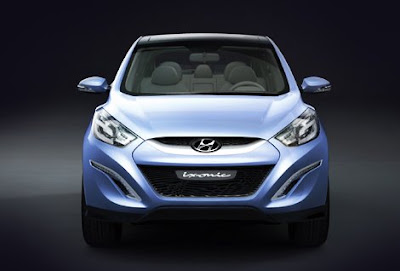
Luxury Car Hyundai iX-Onic Concept Car


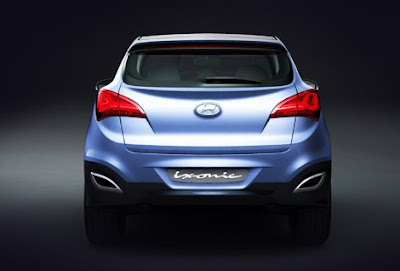
Hyundai ix-onic concept is a preview for the next generation Tucson crossover that will debut end of the year. Currently we don’t know how many styling cues will be taken from the concept to the production model, but we hope a lot. Questionable marketing decisions aside, the ix-onic, which previews the next Tucson crossover, is a winner. Aesthetically, it has some mildly derivative elements (the face has a certain Mazda quality about it), but it's a good-looking vehicle that comes off bigger and more muscular than its 173-inch length suggests. In other words, it's got presence.
The exterior also has some innovative touches, including headlamps with cool – if slightly contrived – moving internal elements (check out the video after the jump), and as well a coral-like asymmetrical grille mesh and very strong upswept greenhouse that shows off a clean, less hard-edged interior. That said, we could do without the heavy-handed chrome wheels that look like they were cribbed from the guys over at West Coast Customs.
Hyundai’s European designers have done a great job. ix-onic concept looks a lot bigger than it actually is. In fact it is only 4,400 mm long and 1,850 mm wide.
Interestingly, with the ix-onic, Hyundai designers are now going on record saying they are working toward defining a "hexagonal" front graphic as the company's new universal corporate face.
How the latter proclamation fits in with new offerings like the Genesis Sedan and Coupe or the Equus is something of an open question (perhaps this is just on designs for the European market), but as aesthetic signatures go, we can see this idea working to Hyundai's advantage, as the company's offerings currently don't really have a familial design element to tie them together.
The ix-onic – pronounced "ik-sonnik" – makes use of Hyundai's brand-new 1.6-liter GDi turbo four-cylinder, which routes its 168 horsepower through a six-speed double-clutch transmission (a bit of tech we don't recall seeing from Hyundai before), and the drivetrain has stop-start tech to help it yield a commendably low 149 grams-per-kilometer of C02. With Hyundai's previous admission that the company will move toward all direct-injection engines, we can expect to see this powerplant coming to America in the next Tucson, although perhaps not immediately.

Luxury Car Hyundai iX-Onic Concept Car Hyundai iX-Onic Concept Car - Rear View
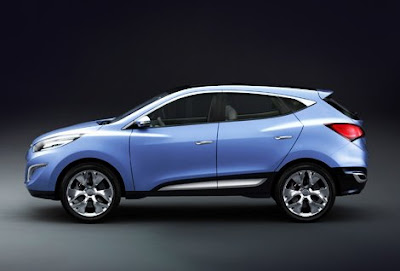
Luxury Car Hyundai iX-Onic Concept Car Hyundai iX-Onic Concept Car - Side View

Luxury Car Hyundai iX-Onic Concept Car Hyundai iX-Onic Concept Car - Front Left View
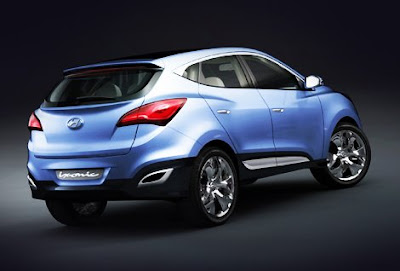
Luxury Car Hyundai iX-Onic Concept Car Hyundai iX-Onic Concept Car - Rear Right View